 Make an appointment
 log in
+998 (55) 508-50-00 Call-center
19.03.2026
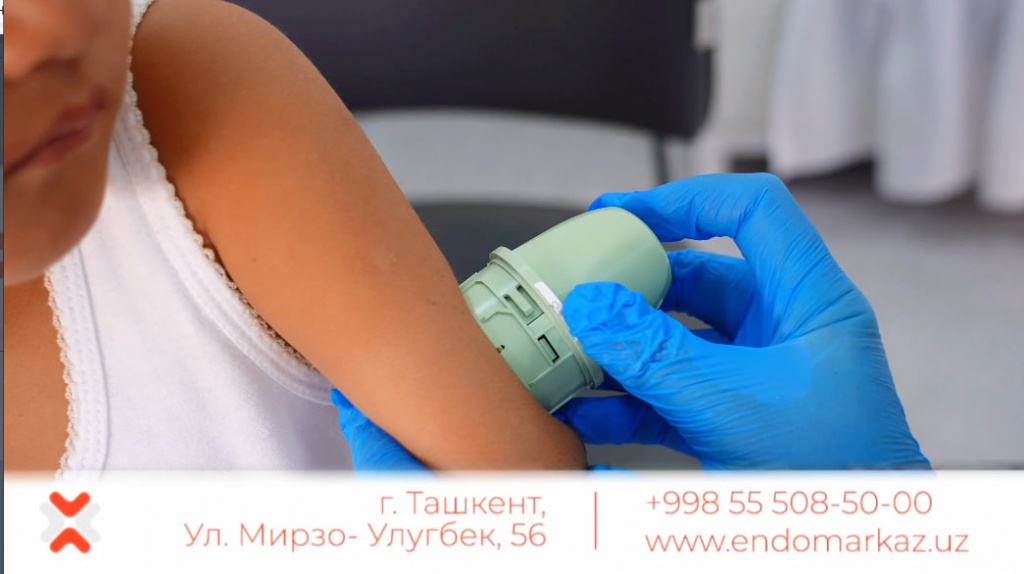
At the outpatient clinic of the Y.X.Turakulov Republic Scientific and Practical Medical Center of Epidemiology and Epidemiology, patients have access to a modern service: the installation of a 24-hour glucose monitoring (CGM) system.
Continuous Glucose Monitoring (CGM) is an innovative method for monitoring blood sugar levels. A special sensor is implanted subcutaneously and automatically measures glucose levels at high frequency over several weeks, transmitting the data to a reader or mobile app. This provides a complete and objective picture of blood glucose fluctuations throughout the day and night, including periods of sleep, physical activity, and food intake.
Unlike traditional self-monitoring with a glucometer, CGM records not only current values but also the dynamics of glucose changes, which is especially important for identifying hidden hypo- and hyperglycemia, as well as assessing blood glucose variability.
Advantages of the method:
Continuous monitoring of glucose levels in real time
Detection of nocturnal and asymptomatic hypoglycemia
Assessment of the impact of nutrition, physical activity, and therapy
Increased treatment effectiveness and safety
Reduced risk of diabetes complications
Possibility of more accurate individualized therapy
Who is a candidate for CGM installation:
Patients with type 1 diabetes
Patients with type 2 diabetes (especially those on insulin therapy)
With unstable blood glucose levels
With frequent or hidden hypoglycemia
Patients failing to achieve target glycemic levels
Pregnant women with gestational diabetes
When selecting and adjusting hypoglycemic therapy
Children and adolescents with diabetes
Patients at high risk of complications
Using a CGM system allows physicians to obtain detailed information about a patient's glycemic profile, promptly identify problematic periods, and adjust treatment based on individual needs. This is an important step towards the implementation of personalized medicine and improving the quality of life of patients with carbohydrate metabolism disorders.
Video:
At the outpatient clinic of the Y.X.Turakulov Republic Scientific and Practical Medical Center of Epidemiology and Epidemiology, patients have access to a modern service: the installation of a 24-hour glucose monitoring (CGM) system.
Continuous Glucose Monitoring (CGM) is an innovative method for monitoring blood sugar levels. A special sensor is implanted subcutaneously and automatically measures glucose levels at high frequency over several weeks, transmitting the data to a reader or mobile app. This provides a complete and objective picture of blood glucose fluctuations throughout the day and night, including periods of sleep, physical activity, and food intake.
Unlike traditional self-monitoring with a glucometer, CGM records not only current values but also the dynamics of glucose changes, which is especially important for identifying hidden hypo- and hyperglycemia, as well as assessing blood glucose variability.
Advantages of the method:
Continuous monitoring of glucose levels in real time
Detection of nocturnal and asymptomatic hypoglycemia
Assessment of the impact of nutrition, physical activity, and therapy
Increased treatment effectiveness and safety
Reduced risk of diabetes complications
Possibility of more accurate individualized therapy
Who is a candidate for CGM installation:
Patients with type 1 diabetes
Patients with type 2 diabetes (especially those on insulin therapy)
With unstable blood glucose levels
With frequent or hidden hypoglycemia
Patients failing to achieve target glycemic levels
Pregnant women with gestational diabetes
When selecting and adjusting hypoglycemic therapy
Children and adolescents with diabetes
Patients at high risk of complications
Using a CGM system allows physicians to obtain detailed information about a patient's glycemic profile, promptly identify problematic periods, and adjust treatment based on individual needs. This is an important step towards the implementation of personalized medicine and improving the quality of life of patients with carbohydrate metabolism disorders.
Video: